Zach Bryan at the Oakland Coliseum: Transcendent

We arrived a little late from San Francisco to the Oakland Coliseum on the lovely, warm afternoon of Friday, May 31.

Although we missed the first opener (Levi Turner), we made it just in time for the second act, Mt. Joy. The Coliseum, while absolutely, panic-attackingly crowded and terrible inside in the corridors, was so pretty outside in the golden hour of twilight.

Our seats were up a couple levels and just left from center of the gigantic stage stretched out across the outfield. The field was half lined with chairs and half open space. It was already pretty full throughout the stadium and certainly mobbed just behind us inside.
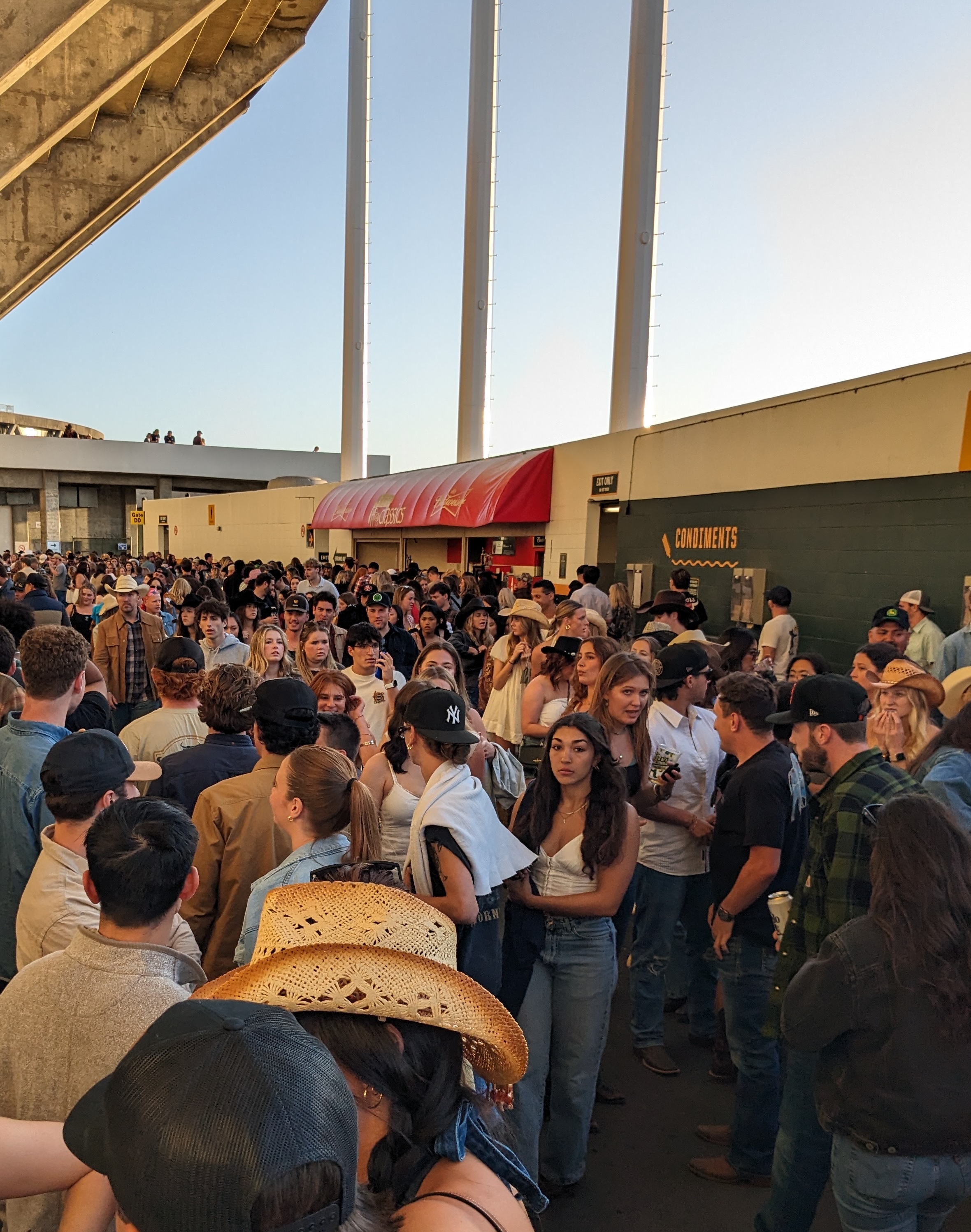
Initial Panic

I spent most of Mt. Joy’s set braving those corridors and waiting in an enormous line for a tall can of Negra Modelo, failing at resisting feeling old and wrongly attired. I’m not sure where most of the crowd came from, but looking around, I felt a wistfulness at not being a woman who could pull off a wispy white sundress with a straw cowboy hat and cowboy boots, and not just because of the Bay Area’s Karl the Fog.
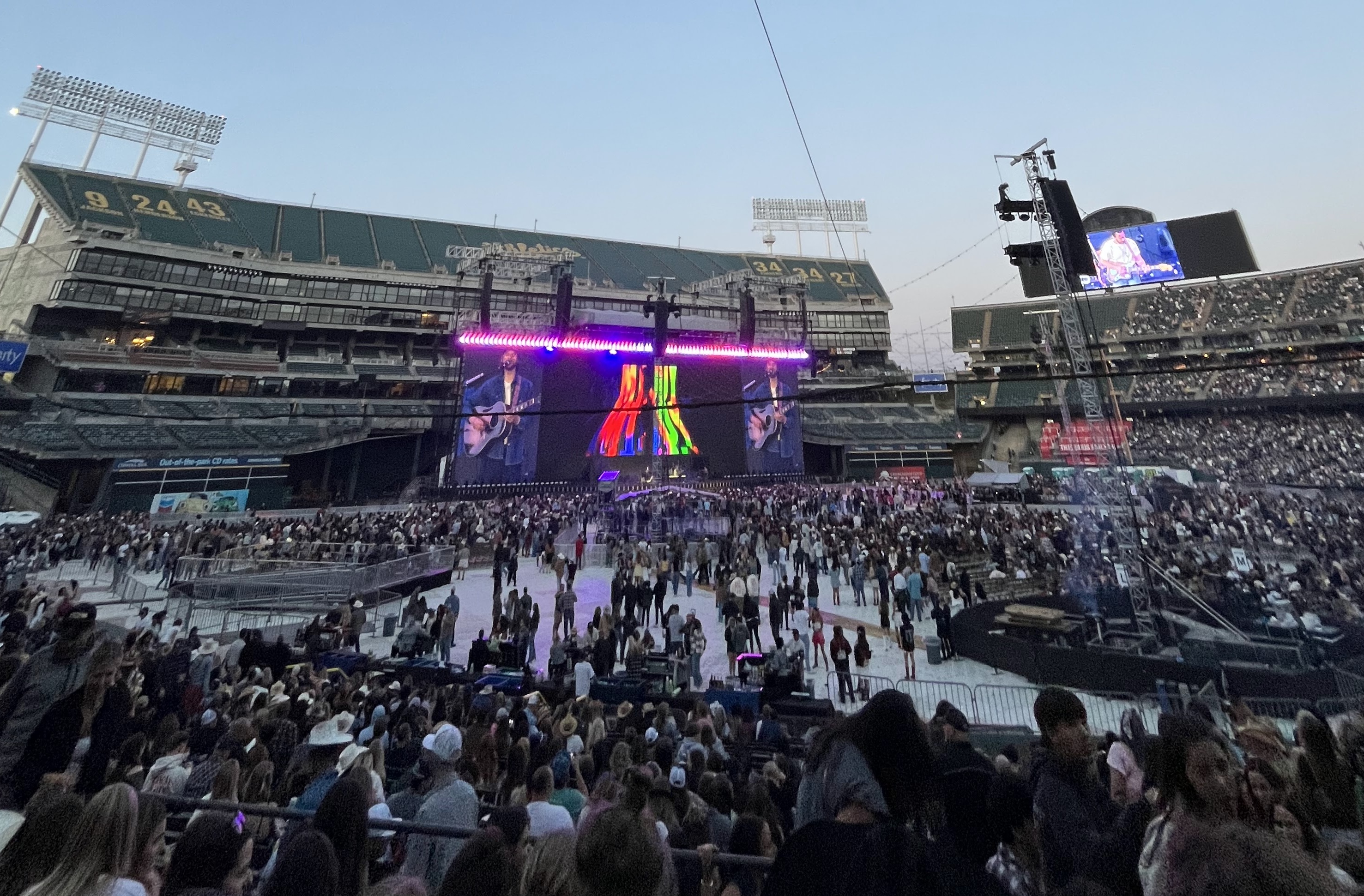
Mt. Joy

I’m also not sure how to qualify or characterize the night’s music genres. I’d never heard Mt. Joy before, and was enchanted when I made it back to my seat in time for the refrain Jesus Drives an Astrovan. Clearly this was a crowd favorite, played so well that I can still hum the tune two weeks later. But was I an imposter, not previously having this music in my life before?

As the sun dipped below the stadium rim, the lovely strands of light strung back and forth across the field illuminated the view between seats and stage. By the time Zach Bryan came on, it was dark.

A grainy black western video lit across the entire stage backdrop as Zach and band kicked it off and the whole of the audience, which appeared to be sold out across all stadium levels, launched up from their seats, barely sitting down the entire show.
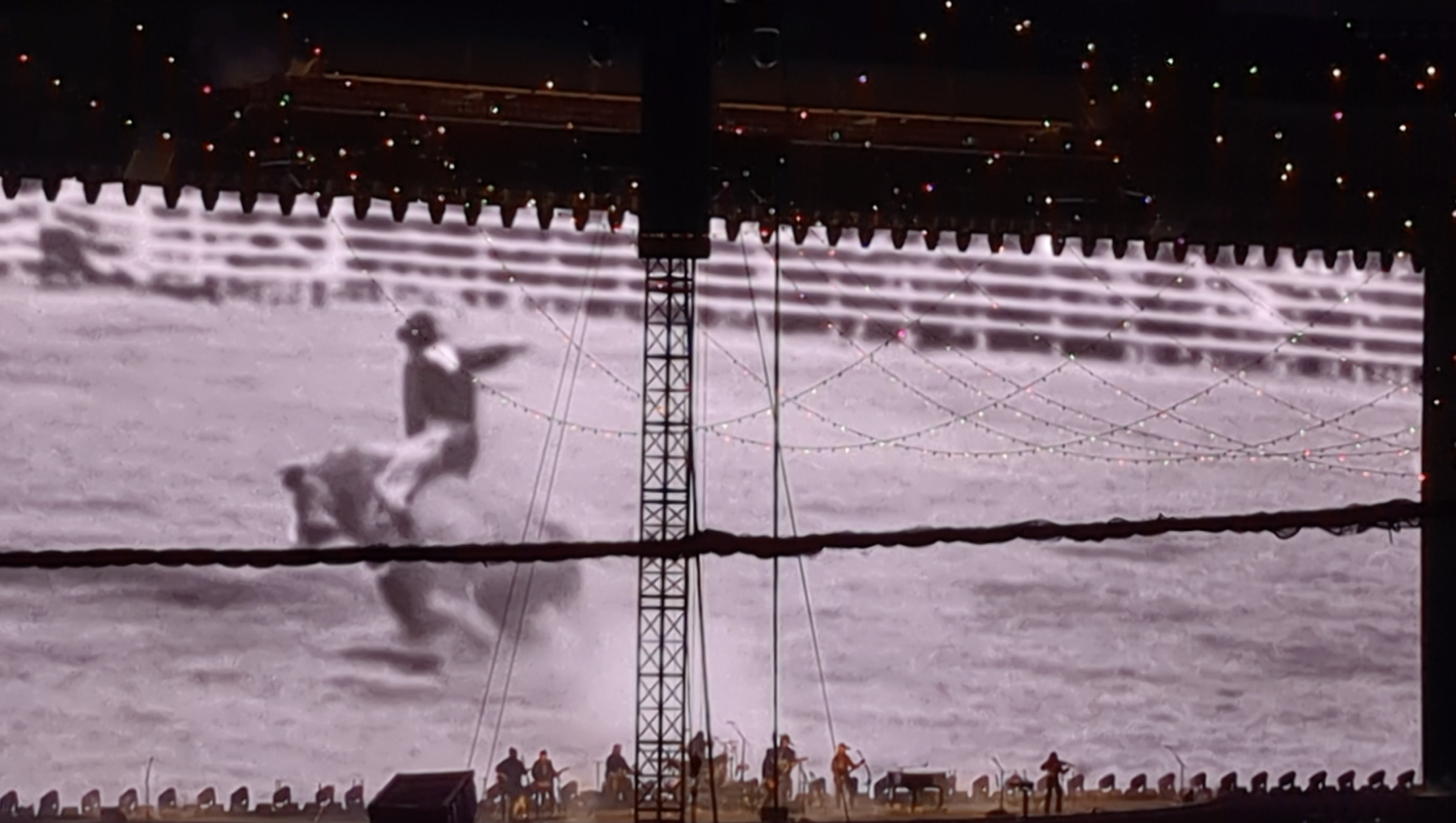
Black and White Rodeo Entrance

Aside from the very pretty video backdrops, the first thing that struck me was Zach’s James-Dean-twinkly side-eye gazing in apparent wonder across the fired up crowd. He said something like he “never expected to play a crowd like this,” and although I wasn’t sure whether he meant Oakland, not necessarily a country stronghold, or the sheer stadium size, he seemed fully geniune admiring and thanking the adoring crowd the whole night. It sure looked beautiful from our seats, too.
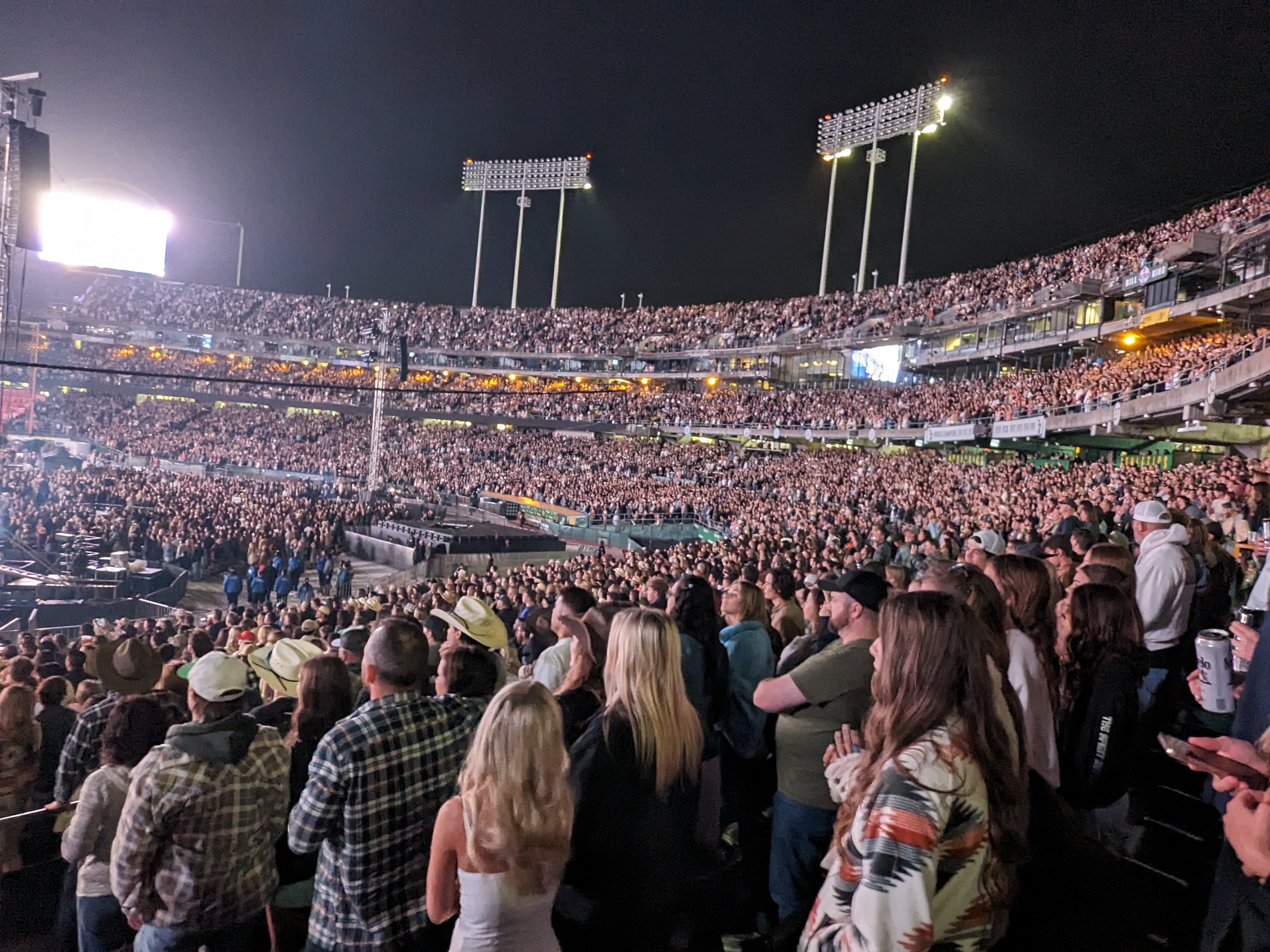
Rapt Crowd

I wouldn’t have called myself a fan before the show. I had only known a few of Zach’s songs, but those I knew (Something In The Orange, not played this night; and several others that were played, like Burn, Burn, Burn; East Side of Sorrow) hit on some deeper level than a casual listen.

The crowd, on the other hand, was all in, often singing along in a back-and-forth with Zach.

Even when Zach debuted the first live performance of the newly released Pink Skies, the crowd sang along – to every word – while Zach looked on, it seemed, in open wonder.
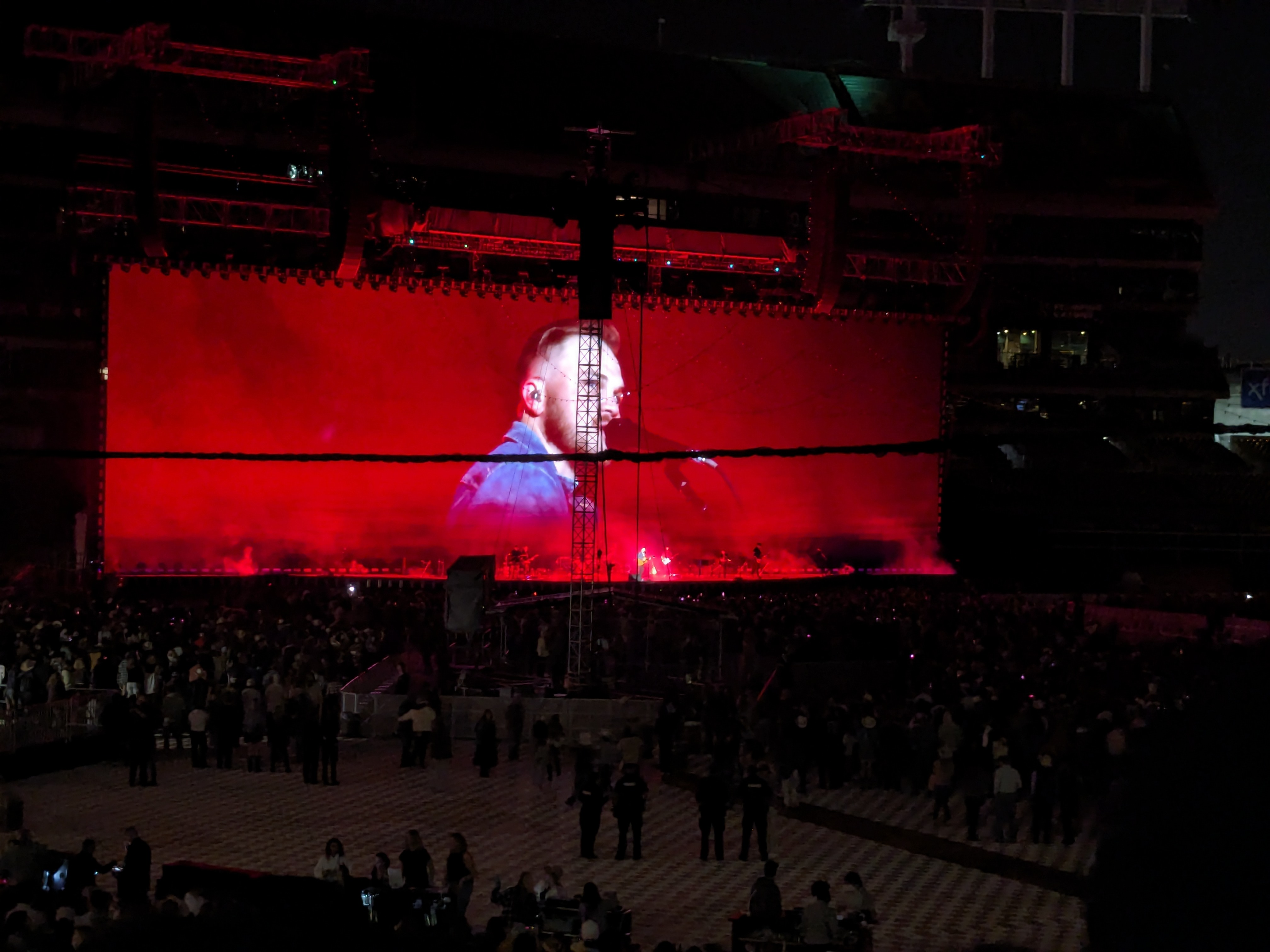
The Open Wonder

That’s a special kind of songwriting. I have been looking at show reviews since, and it feels like we really were in the magic hours that night. This is a real-talk guy, and I saw that he had been quite vocal against Pink Skies being released to pop radio that week. I knew his music casually, and likely the better part of the crowd were diehard fans, but a reach across music genres feels like a reach across aisles of a truly healing kind. When he later relented and apologized for being anti-pop or whatever it was – not that that particularly matters – it made me feel less like some kind of imposter without a country background and a carefree, white sundress.
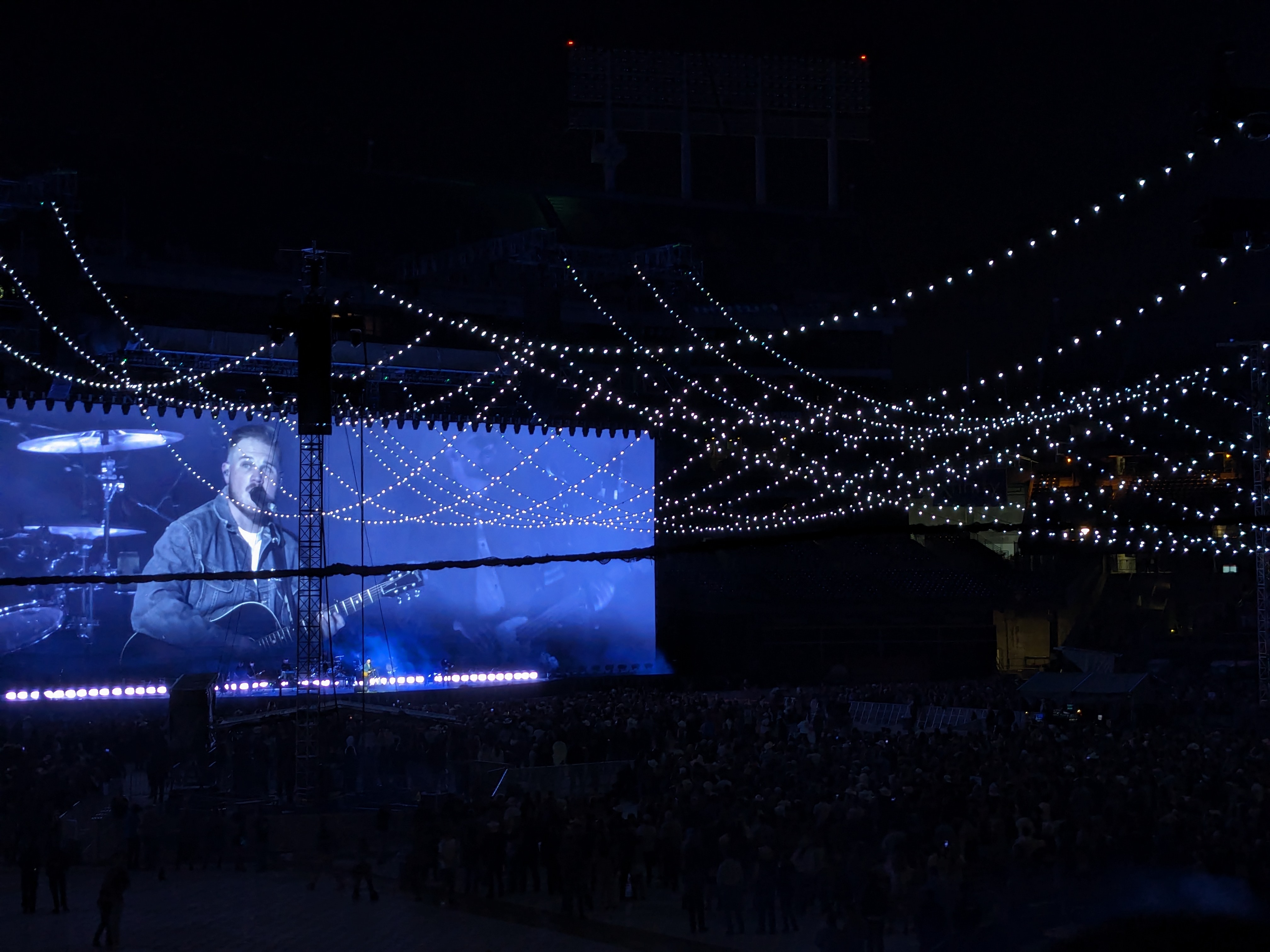
Across Aisles

I believe music IS at its universal best when it transcends genres and thus differences. I’m thrilled I got to see this show, and can’t imagine there are many people, even if they don’t see themselves as religious country fans, who would not feel a chill at lines like “I bet God heard you comin’.”
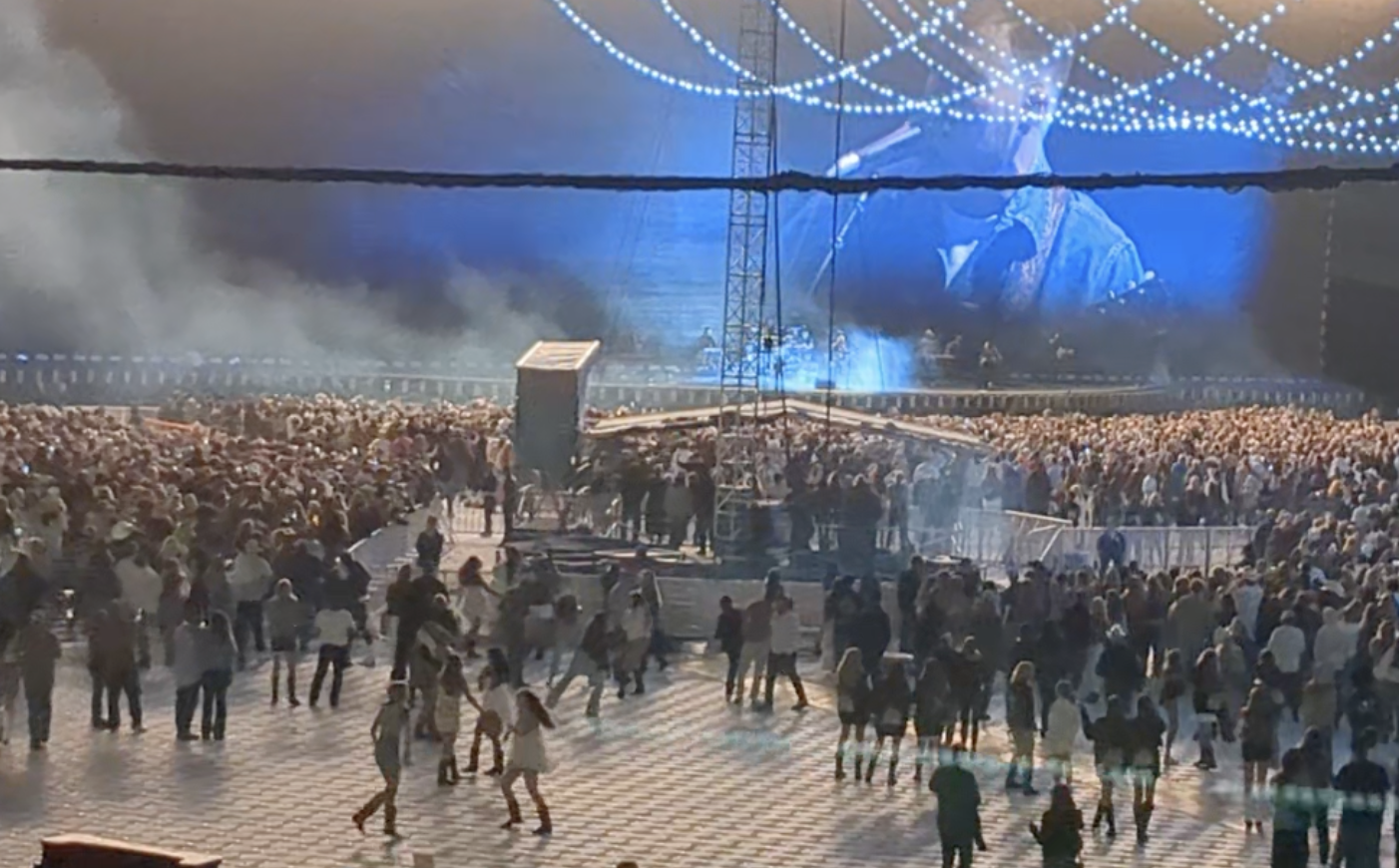
White Sundresses and I Remember Everything

The encore was transplendent. A set of golf carts set out from the stage towards a different platform more in the center of the floor. As the floor crowd got the memo, there was a human surge in that direction. Then this platform lit up, and the band struck up a most lively rendition of Revival. There were many solos from the large and varied instrument pool on stage, including the kickass fiddle solo by the woman who apparently was a guest to the band subbing for a new father, and a fainting act – revival fashion, I realize, with embarrassment, in hindsight – by the banjo player that had me downright fooled. Fireworks ensued. Warm glows bathed the carefree dancers in their white sundresses on the small part of the floor that was empty. It was a stunner of a closing song and setting.
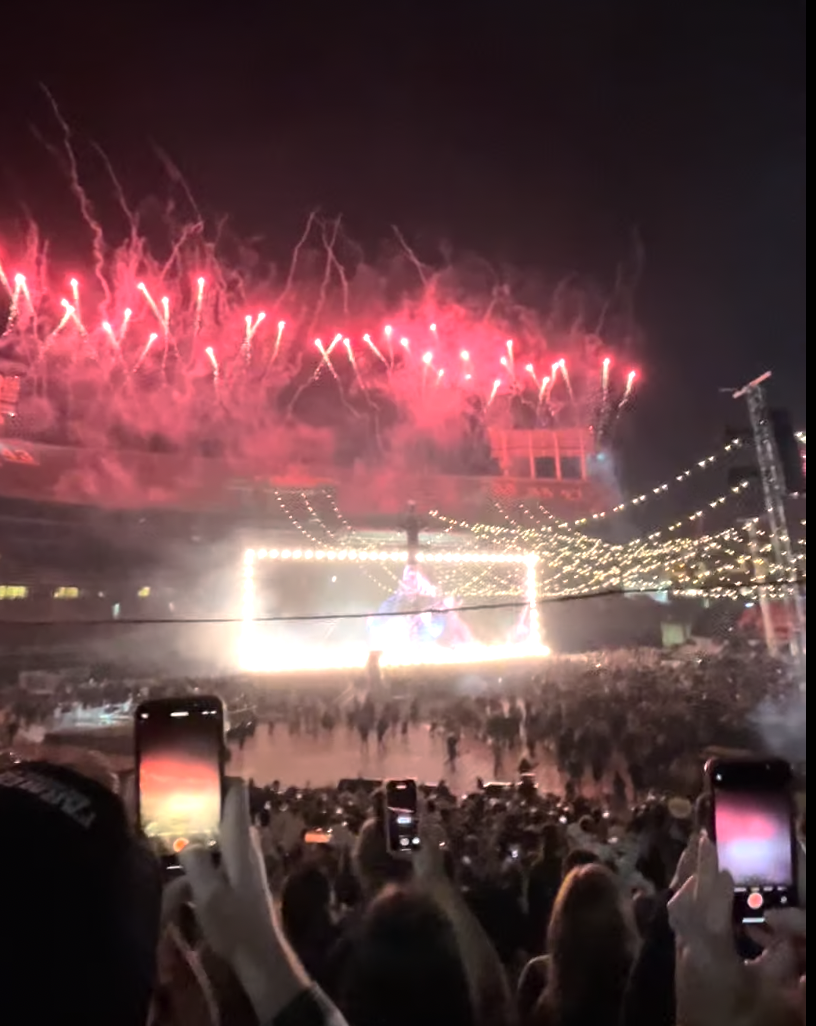
Revival

If there is a problem with this superlative of a live experience, it is that all other music, at least for a time after, sounds tired. I’m coming out of that slowly, but I will remember the color and the warmth and – maybe most of all – the feeling like we belonged. From the looks of it, this fellow from Oologah, Oklahoma, felt the same about his Oakland, California welcome.

You bailed him out, never said a thing
About Jesus or the way he’s livin’

How to keep my mother

A brief reading at the cemetery for her committal

I’ve been thinking a lot about memory.

After her brain injury in October 2020, I remember sitting with my mother outside on the patio at the house in Vacaville. The most voracious reader I have known, she couldn’t, and could never again, see well enough to read due to visual field cuts. She would never fully regain her balance, and in these early days she was mostly drowsing and not very responsive. With help, we brought her outside and I sat with her in the stillness of this particular autumn afternoon and played audio of the readings of Northern Irish poet Seamus Heaney. I like to think it helped her think of her homeland and Irish family.

Over the following several months she regained an astounding amount of function as family, and many friends old and new, bore loving witness. 

While she could not live independently again (and had not wanted to live alone at the house in Vacaville anyway after Dad died), in San Francisco, she did nevertheless have her own place with her own carers, worked very hard with therapists so that she could get her own self around the apartment, and thus did gain some independence for herself. We could visit every day; she enjoyed very good foods and very excellent care; she had a sunny window with a view of the city; and she made new friends. 

Despite her constant struggle after that to retain short-term memory, she was always happy to see us. She not only built loving new relationships with carers and our trainer, and even with therapists who perhaps visited only briefly, but she always kept precious the memory of long-time friends, some of whom went to heroics to visit and to constantly keep in touch.

And like a volume of books, she retained the memory of songs and poems from a lifetime ago — from a distant Irish past. She trotted out old Irish songs I had never heard before, and continued to recite poems from far and wide, as if not being able to read was not important, because the words were etched with permanence inside her mind.

Although her dad, Grandpa Norman, taught me to memorize the alphabet backwards, I have never been as talented at reciting poetry as Mom and Grandpa. But I thought if I could remember a poem like she could remember a poem, I could keep her. 

So I memorized this poem, and read it at the cemetery:

And some time make the time to drive out west
Into County Clare, along the Flaggy Shore,
In September or October, when the wind
And the light are working off each other
So that the ocean on one side is wild
With foam and glitter, and inland among stones
The surface of a slate-grey lake is lit
By the earthed lightning of a flock of swans,
Their feathers roughed and ruffling, white on white,
Their fully grown headstrong-looking heads
Tucked or cresting or busy underwater.
Useless to think you’ll park and capture it
More thoroughly. You are neither here nor there,
A hurry through which known and strange things pass
As big soft buffetings come at the car sideways
And catch the heart off guard and blow it open.

Postscript by Seamus Heaney

It strikes me that this poem is breathtaking because it describes a moment that can never be captured or relived, which is, of course, what makes it precious. On the other hand, memory — especially in the short term — can be so fickle. When you have that one moment of the present, you can’t turn around to drive back to get it again. I am happy I got to say “I love you more” a million more times to my mother, but I can’t say it that one more time.

I was able to recite the poem from memory. But I was still unable to keep my mother.

After he died, a fellow poet said of Seamus Heaney: “His work will pass into permanence.” So maybe memory isn’t exactly the way I will get to keep her.

I will breathe in deep breaths, and when I release them, maybe each time I will allow a little more of my mom to pass into permanence in my heart. And I will know that she is there not in the keeping, but in the release, during every countless random hurry when the wind and the light catch it off guard and blow it open.

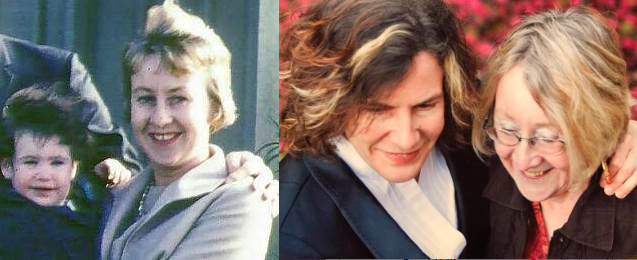
Me and my mom, Norma Moya Black Watson, 1936-2022

Father’s Day 2019 — via 1940

worlds-fair.jpg

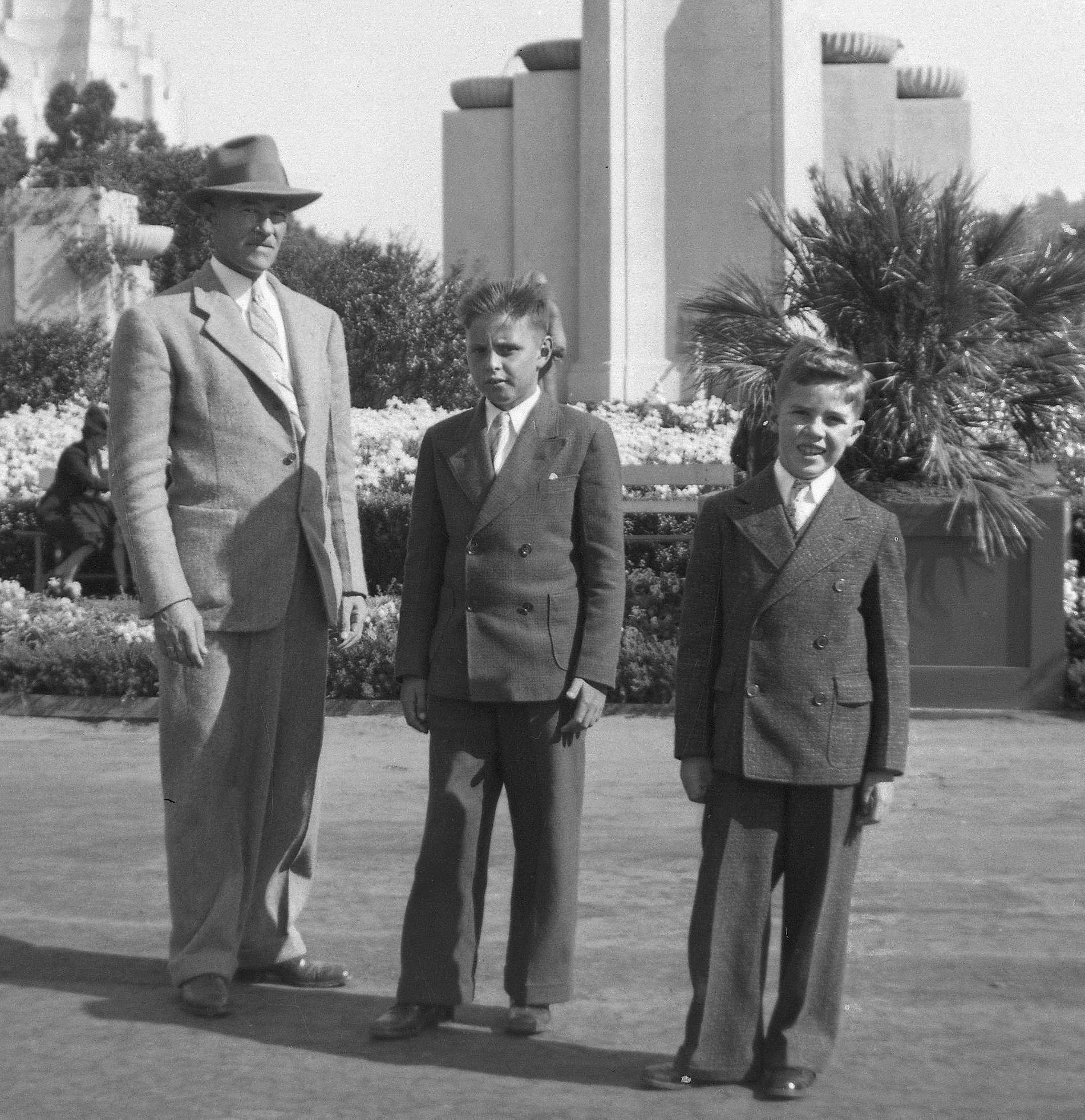
The Watsons at the World Fair in ~1940. Left to right: my grandpa Ernest, my uncle Ernie, my dad Richard.

This is the first father’s day I’ve ever known without my father. I don’t much like it, but although Dad has been gone for months, I still feel his presence and find reminders of him at all kinds of the right moments.

Recently, I was talking with Mom about what to do with a box of Dad’s old 78 records. I love music; I love records, and these old 78s are from a special era in the 1940s when music was not as easy to come by as it is today. Songs were pressed one to a side on weighty shellac record discs which played through to a deep groovy sound we don’t hear in digital renderings today. Clearly my dad prized and loved this collection, caring for and moving the box of volumes of 78s as my family moved several times over seven decades, keeping the discs in good shape even when the instruments for playback were no longer available at home. Knowing how special these were to him (and some of these discs were also hers), Mom was having a hard time letting go of or knowing what otherwise to do with these.

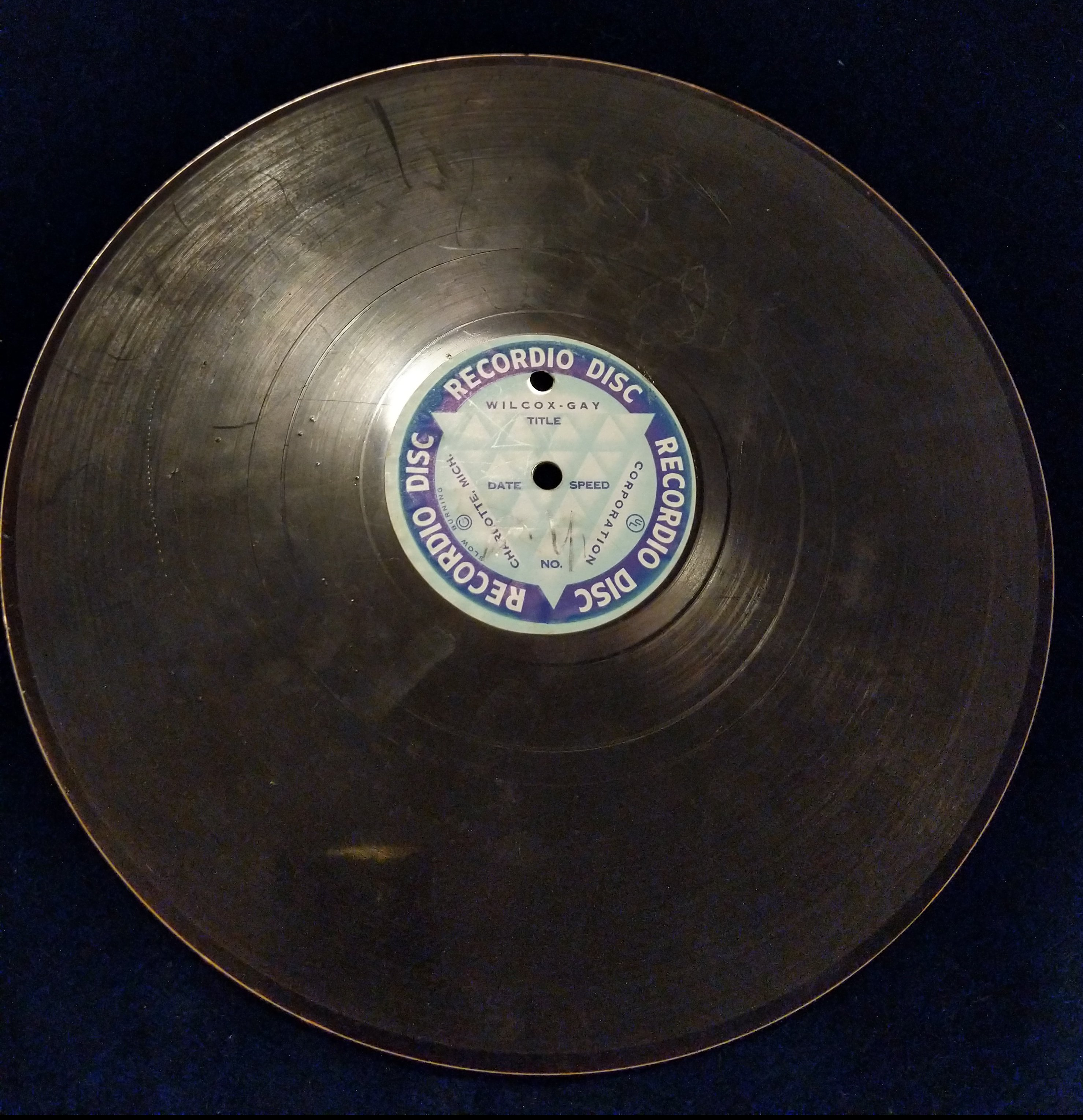
I took the box with me and mulled over it for awhile. Among the professional volumes, two particular discs were out of place, set apart in a tattered old paper cover with a pencil scrawl. (“Look,” Mom said, “This one says ‘Richard’ on it.”) We had no idea what they were. The labels on these discs were plain (branded “Recordio” and “Capitol”), and a scribble on each of them in an area where contents should have been listed gave no indication what they could possibly be — except, apparently, self-recorded.

recordio

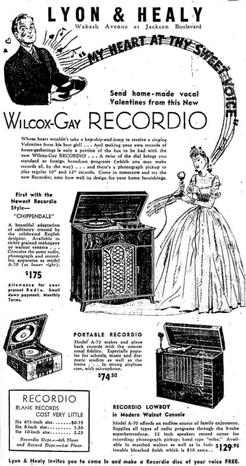
The Wilcox-Gay Recordio: 1940 Home Recording – via http://onetuberadio.com/2015/01/28/the-wilcox-gay-recordio-1940-home-recording/

I didn’t know home-recorded records were ever a thing, but I did some research and I found out that was indeed a possibility in the 1940s. Given that my grandfather was an audio technology wizard of sorts for his time, he no doubt would have had a home recorder like the Wilcox-Gay Recordio in their home in San Mateo. Especially if these could have voices from our family’s past on them, I realized I had to find a way to listen to them.

img_20190527_1800175066530167026205198.jpg

Unlike most of the other quality shellac 78s in the box – songs from the likes of Al Jolson, Benny Goodman, Glenn Miller, Count Basie and others – these two discs were pretty banged up. I wasn’t sure they’d be playable at all, and even so, with over 70 years of grime and scratches on them, I was not optimistic anything would be audible if they were playable. One of them, the disc with the Capitol label on it, looked like it was even fading away to some kind of strange metal underneath. And never mind that I long ago got rid of my own last phonograph. But I found a potential solution to this puzzle with Nick at a friendly and professional service across the Bay, Analog-to-Digital.net, who would give digitizing these things a try for a reasonable cost.

img_20190527_175928758529590934208422.jpg

The digitizations came out better than I expected. Noise, unavoidable, is reduced, and skips are all over, but the recordings are audible. I’m not sure what’s going on for a great deal of these recordings, but it is clear somewhere in all the noises, skips, pops, and hiss that here are voices from the past of my dad, his brother, maybe some friends, and even my grandparents, having a blast using a home recorder.

Nick sent me two mp3 files, one per disc. There isn’t much more than 5 minutes of recording per disc. I separated the audio files into ‘tracks’ of sorts and gave them titles reflecting my best guesses as to what’s going on in each segment. I tossed some completely unintelligible parts but liberally kept most of the action, in the order it was pressed onto each disc, and uploaded it all to two separate playlists on SoundCloud. Voila: Today’s Recordio: Voices from the Watson home in the 1940s.

I can’t help but wonder if this iteration will stand the test of time as well as heavy old 78 records to last another 70 years, until the next time this format becomes antiquated and needs to be transferred to something playable.

For now on the first Father’s Day without you Dad, I’m happy we get to join you long ago at home.

The Recordio

Capitol